Good beef. The right way to cook it.
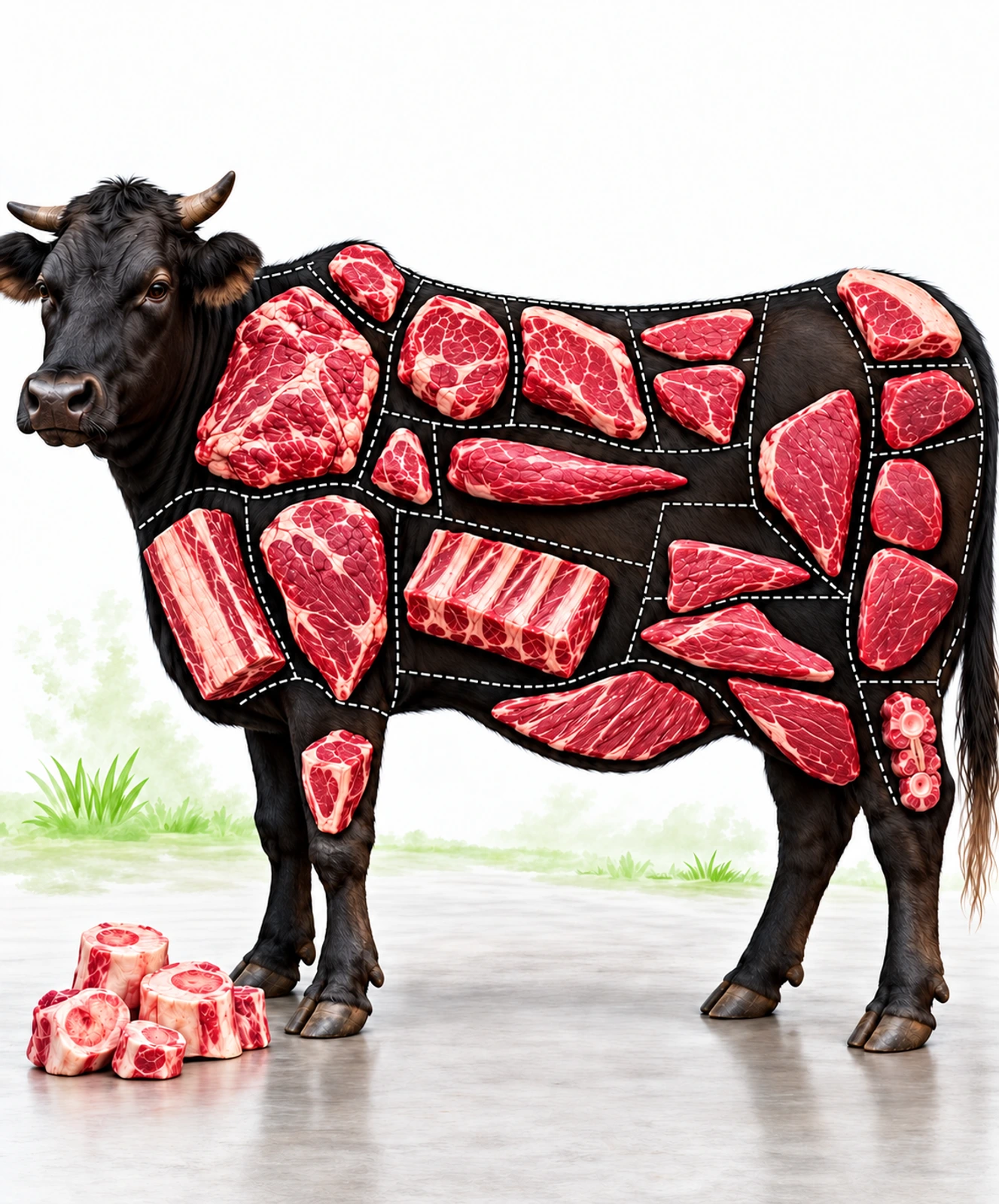
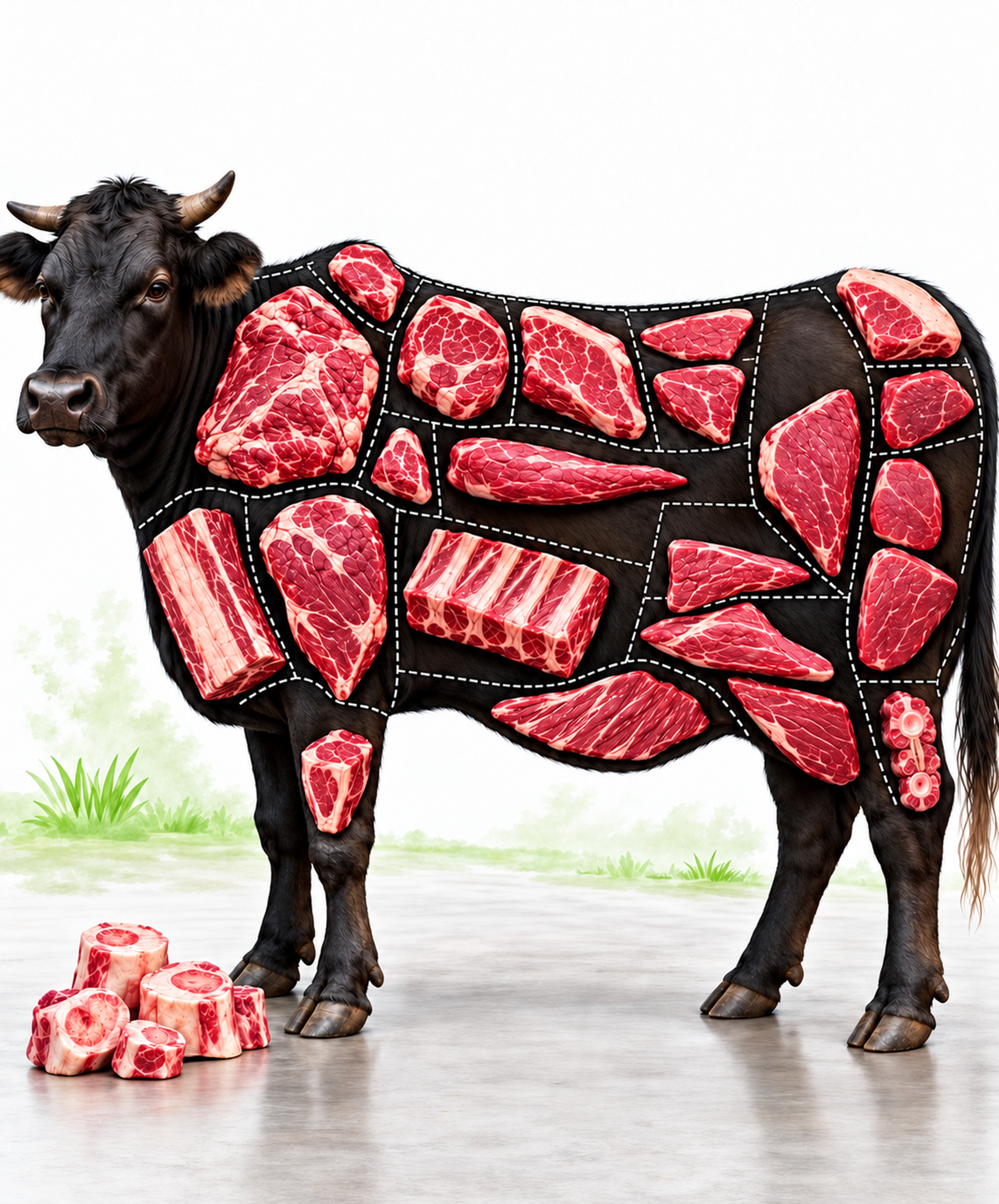
Click a cut on the cow for cooking ideas, step-by-step methods and matching marinades.
Metric throughout
What we corrected in the original diagram
This is an illustrative navigation map, not an anatomical cutting chart. Cut boundaries and illustrated positions are approximate. Oxtail comes from the tail, not the hind leg. Australian names replace overseas labels in this guide.
- Ribeye → scotch fillet / rib eye.
- Striploin → sirloin / porterhouse.
- Tenderloin → eye fillet; shank → shin.
- Top sirloin → rump region. Top sirloin cap and rump cap are treated as aliases, not separate cuts.
- Top round → topside; bottom round → silverside/outside; eye round → girello.
- “Round” and “shoulder” describe groups, so the exact retail cut matters.
- “Needle point” remains unidentified, with confirmed alternatives shown. Hump is verified as chuck crest (AUS-MEAT HAM 2278) and now has its own slow-cooking options.
See the official Australian cutting chart in Sources for anatomical locations.
Australian lamb names, explained
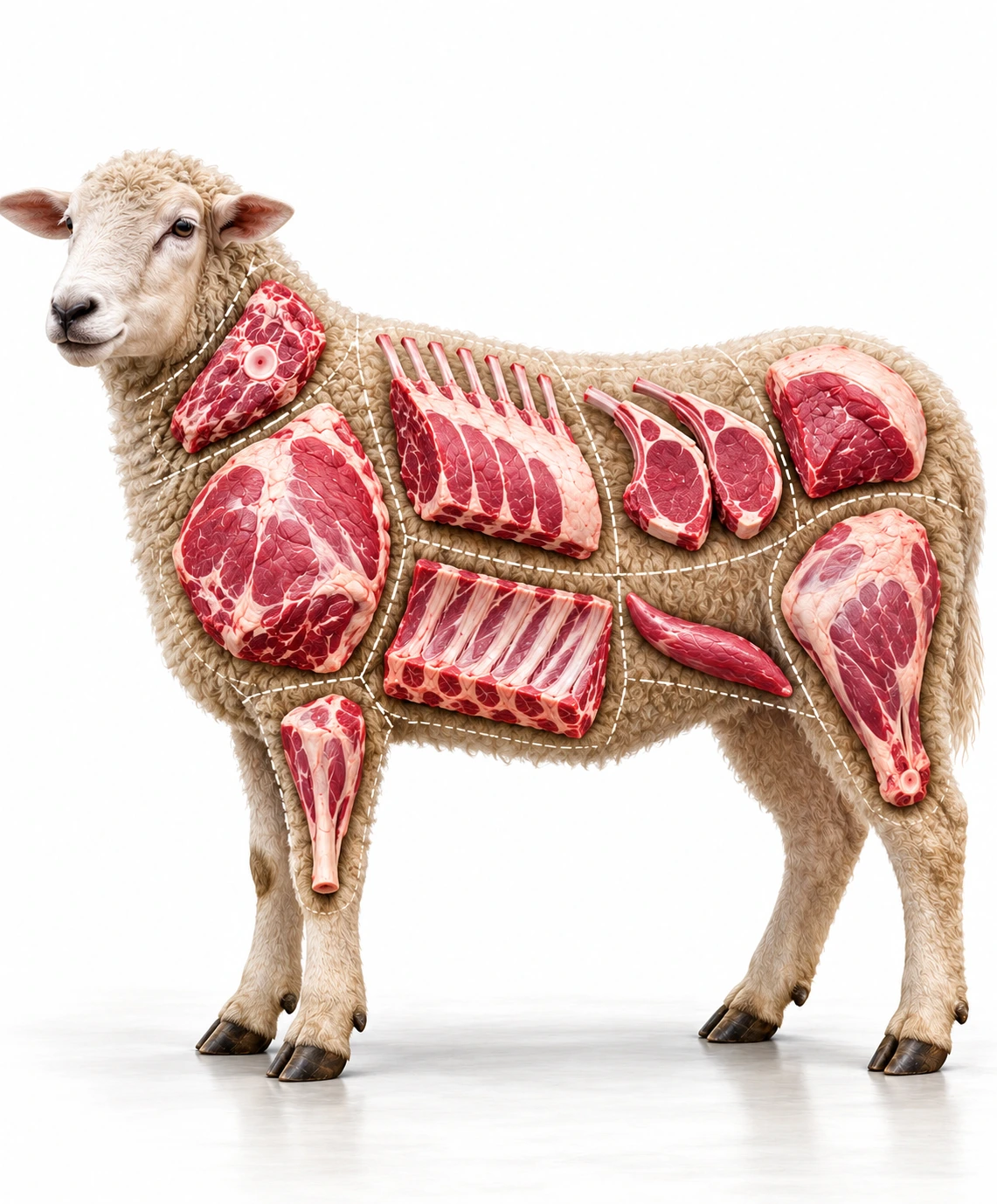
The photorealistic montage shows raw cut examples arranged on the animal, matching the beef guide. Its boundaries and positions are illustrative, not exact cutting lines. Tenderloin is an internal muscle, shown as an inset. Compare with the official Australian Lamb chart below.
- Chump and rump are related Australian names; chump chops retain the bone.
- Eye of loin / backstrap is distinct from the smaller tenderloin / lamb fillet.
- Cutlets come from the rack. Loin chops come from the shortloin.
- Shoulder and forequarter chops need slower cooking than loin or rack cuts.
- The ribs region also covers breast cooking options, checked against the Australian Butchers’ Guild chart.
- Shanks can come from front or rear legs; both suit slow, moist cooking.
Australian names and method suitability verified on 4 October 2026. Recipes and marinades are original suggestions.
Compare with the official Australian cutting diagram
Australian pork names and map notes
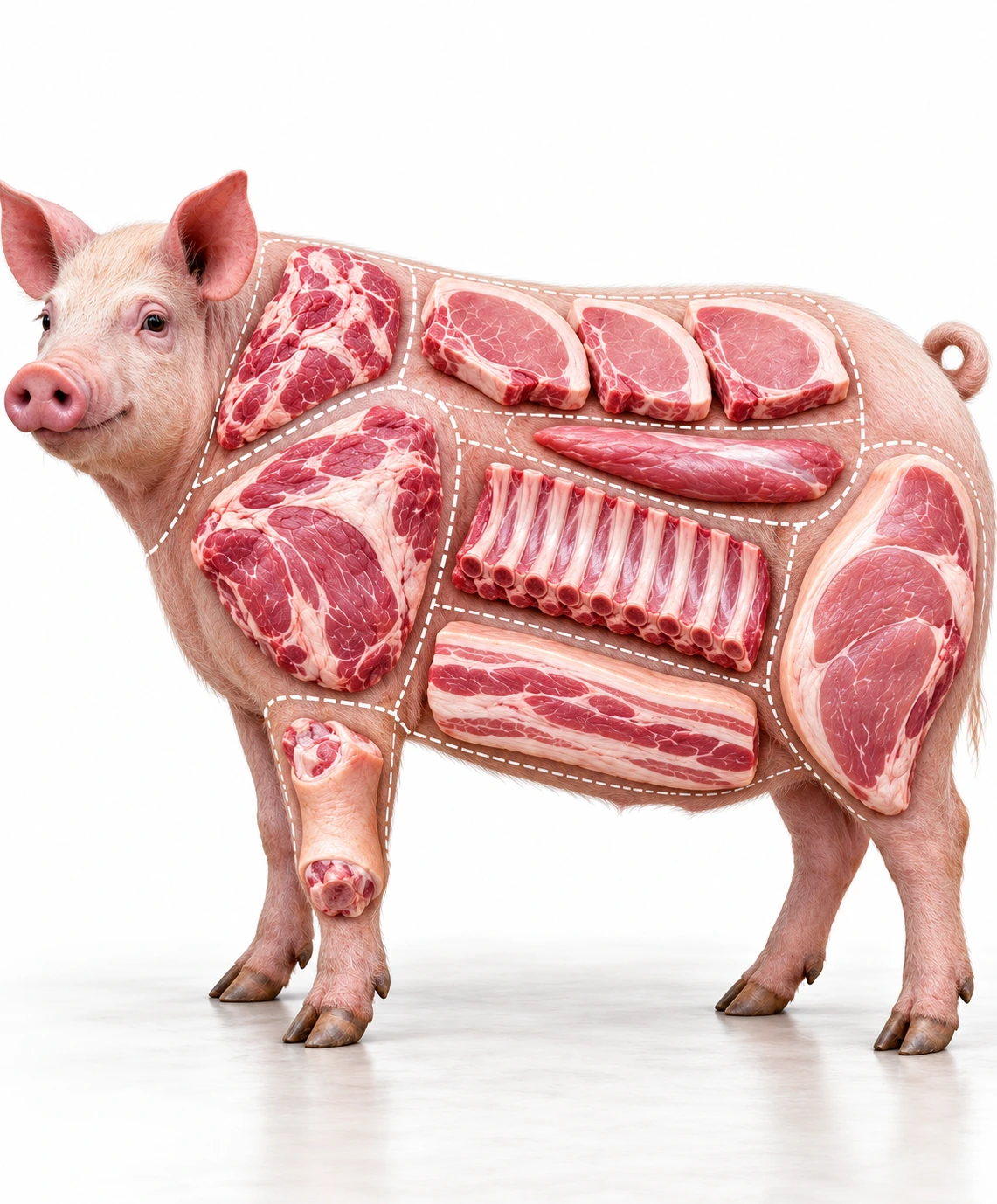
This is an illustrative cut montage. Regions and cut examples are approximate, not precise anatomical cutting lines. Tenderloin sits inside the carcase and is shown as an inset. Collar butt / pork scotch fillet comes from the forequarter. Leg is fresh pork unless explicitly labelled cured ham. Hocks are lower-leg cuts, distinct from trotters.
Ribs can mean loin back ribs (American-style ribs), belly spare ribs or, in some retail labelling, boneless belly rashers. Ask your butcher which product you are buying. Our rib meals specify bone-in ribs; fresh hock meals do not use salted ham hocks.
Australian Pork: official carcase and cut specifications (PDF)
Photorealistic animal and cut images are AI-generated illustrations. Cut names and method suitability were checked on 4 October 2026.
Chicken cuts and map notes
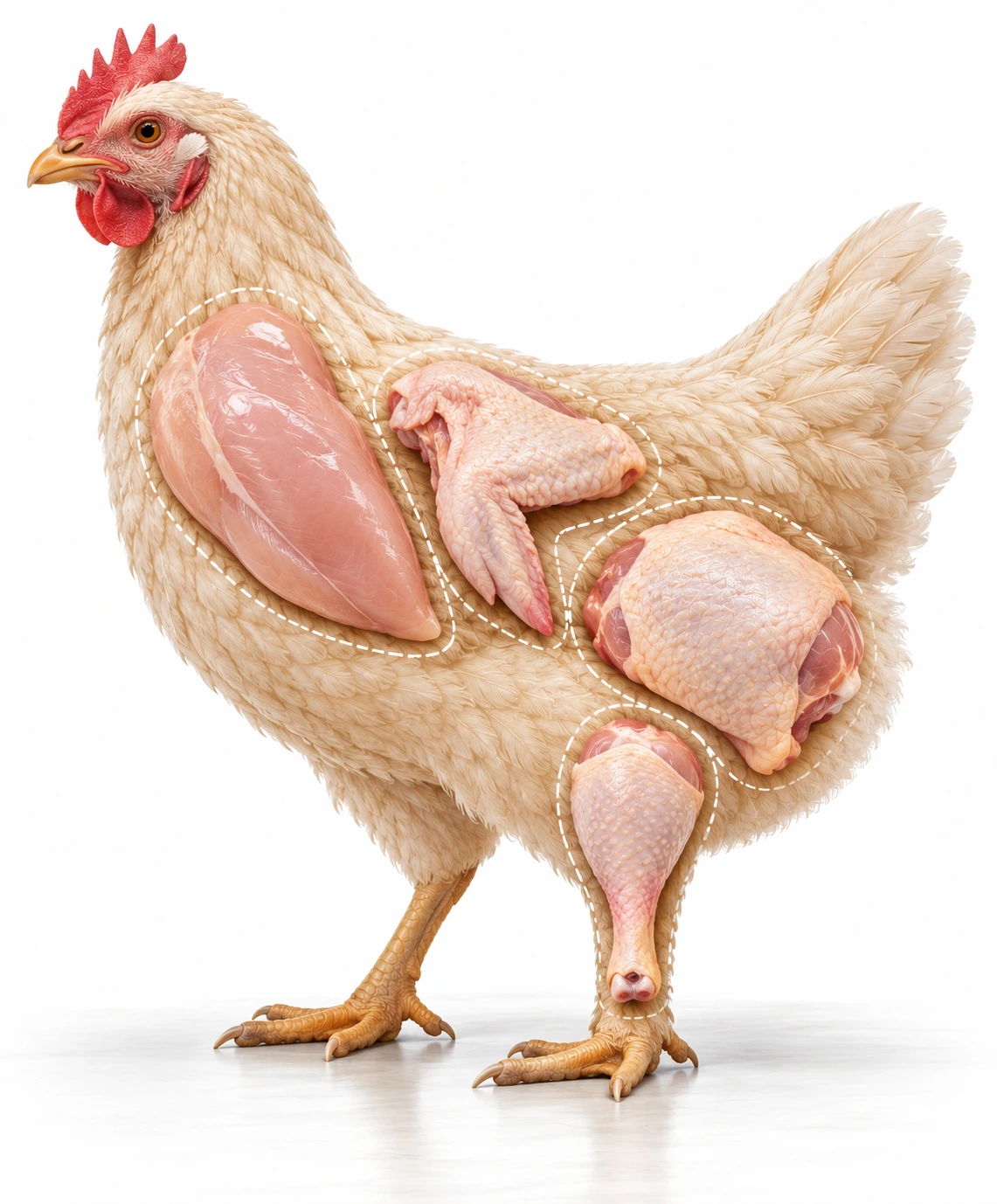
This is a photorealistic illustrative montage, with approximate locations rather than precise anatomical cutting lines. Wings join at the shoulder. Thigh and drumstick are parts of the leg; a maryland combines both. Wing drumettes are not leg drumsticks.
Recipes specify whether bones and skin are included. Breast and thigh meals use boneless, skinless fillets; wing and drumstick meals use bone-in, skin-on pieces. Nutrition excludes bones and wing tips. Purchase-to-edible yields are estimates.
Australian chicken cut guide. Images are AI-generated illustrations.
How do you like your steak?
Australian terms, a visual reference and thermometer guidance. Colour alone is not a safety check.
Doneness is a preference. Safety depends on the product.
The temperatures shown are the current Australian Beef / MLA guide's recommended doneness temperatures, not universal definitions. Other culinary charts use lower values. The guide does not give a blue temperature, so none is invented here.
FSANZ says cooking food to 70°C in the centre generally helps ensure it is safe. Minced or rolled beef, including burgers and rolled roasts, should reach at least 75°C in the centre. Follow packaging instructions for tenderised or injected beef.
People at higher risk of foodborne illness should avoid undercooked meat and follow FSANZ guidance. Use a clean thermometer in the thickest part, away from bone.
Give it a rest
Rest steaks for about 3–5 minutes and roasts for 10–20 minutes. The centre can continue warming after cooking. Always check the required temperature has actually been reached.
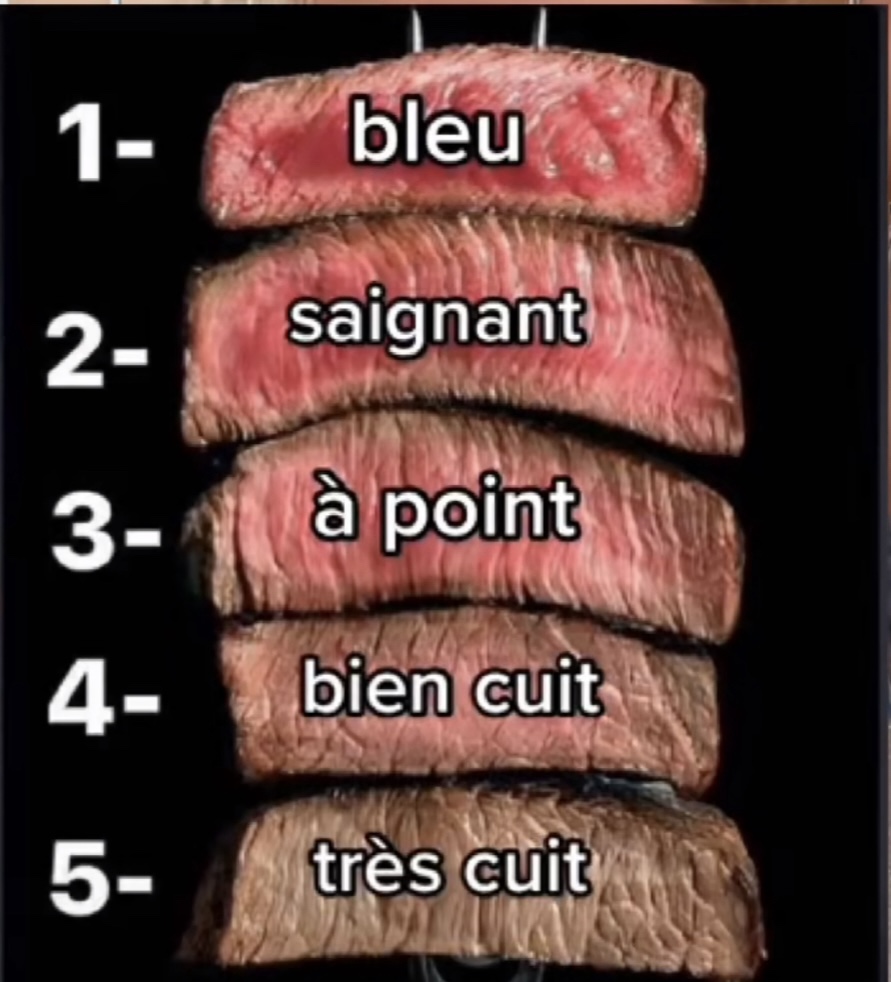
Your French reference, explained
| French label | Closest Australian term |
|---|---|
| Bleu | Blue |
| Saignant | Rare |
| À point | Medium rare to medium* |
| Bien cuit | Well done |
| Très cuit | Very well done |
*À point has no exact universal equivalent. The supplied five-stage image omits some Australian categories. Use the six-stage Australian guide alongside it; these photos do not establish internal temperature.
Get your lamb just right.
Use a thermometer in the centre, away from bone. Colour alone cannot confirm safety.
Whole cuts and rolled meat need different care
These are the recommendations published on Australian Lamb’s dedicated doneness page. Culinary tables can differ, including its separate timing chart, so the source is stated explicitly.
FSANZ says cooking food to 70°C in the centre generally helps ensure safety. Minced or rolled lamb, including burgers, koftas and rolled roasts, should reach at least 75°C in the centre. Follow product instructions for injected or mechanically tenderised meat. People at higher risk of foodborne illness should avoid undercooked meat.
Slow-cooked lamb: check tenderness too
Shoulder, shanks, neck and breast need enough gentle cooking to soften their connective tissue. A steak doneness temperature does not mean these cuts are tender. Continue a covered braise until a fork enters easily, keeping enough liquid in the tray.
Rest chops and small steaks for about 5 minutes; rest larger roasts for 15–20 minutes. The centre can continue warming after cooking. Confirm that any required safety temperature has actually been reached.
Keep marinating lamb covered in the fridge at 5°C or colder. Use clean plates and utensils for cooked meat. Cool leftovers promptly in shallow containers.
Cook pork with a thermometer.
Use the centre temperature and the type of cut. Colour and a fixed number of minutes cannot confirm safety.
Our recipe temperatures
These original pork recipes use 70°C in the centre, following FSANZ’s general cooking guidance. For minced or rolled pork, FSANZ recommends at least 75°C. Our stuffed pork guidance also uses 75°C. Check the thickest part with a clean thermometer, away from bone, and follow product instructions.
Australian Pork’s culinary fillet guide uses a lower temperature, around 63°C, for an intact fillet. We state this difference explicitly rather than presenting the two sources as identical. Our recipe instructions follow the more conservative FSANZ general guidance.
Slow cooking and crackling
Shoulder, hock, belly and ribs need time for connective tissue to soften. Reaching a minimum cooking temperature does not mean they are tender. Continue gentle, moist cooking until a fork enters easily.
For optional crackling, buy skin-on pork and keep the rind dry, uncovered in the fridge at 5°C or colder. Score the rind without cutting deeply into the meat. Salt the dry rind and follow the product’s roasting instructions. Keep marinades and braising liquid away from the rind. Fat can cause BBQ flare-ups.
Measured belly meals use rind-removed pork. Optional rind or crackling is excluded from their ingredients, nutrition and shopping quantities. Fresh pork and cured or smoked products are not interchangeable.
Use clean utensils for cooked food, refrigerate marinades and cool leftovers promptly in shallow containers.
Cook all chicken to at least 75°C.
Use a clean thermometer in the thickest meat, away from bone. Check several pieces, not just the smallest one.
One centre-temperature check for all cuts
FSANZ recommends at least 75°C in the centre for all poultry, including whole cuts, roasts and mince. Chicken does not use the rare-to-well-done steak categories. Colour, clear juices or elapsed cooking time cannot replace a thermometer check.
On a BBQ, brown chicken over moderate direct heat, then move larger or bone-in pieces to indirect heat with the hood closed. Sugary marinades can burn before the centre is cooked; add clean reserved glaze near the end rather than repeatedly using raw marinade.
Handle raw chicken carefully
Do not wash raw chicken: splashes can spread contamination. Keep raw chicken and its utensils separate from salad and cooked food. Discard marinade that has touched raw chicken and use clean plates and tongs after cooking.
Refrigerate at 5°C or colder and thaw in the fridge. Follow use-by dates and product instructions. Cool leftovers promptly in shallow containers. Reheat quickly until piping hot.
Boneless breast cooks faster than bone-in wings or drumsticks. Cooking times in the recipes are estimates; thickness, starting temperature and equipment change the result.
Make the cut your own.
Six simple marinades and rubs. Each quantity below suits 500 g beef; double for 1 kg.
Marinate safely
Cover and refrigerate at 5°C or colder. A marinade mainly adds flavour; it cannot turn a tough cut into a quick-cooking steak. Drain and pat the surface dry before BBQ cooking. Discard anything that has touched raw meat and use a separate, clean portion for serving. Avoid pouring oily marinades onto flames. Sugary marinades can burn.
The quantities and flavour combinations are original suggestions, informed by Australian industry handling guidance. Check all packaged ingredients for allergens.
My meal plan
Your selected beef, lamb, pork and chicken meals, organised by day. Choose the number of servings when adding each meal.
This working plan clears when you refresh. Download it before closing the page.
Shopping list
Measured quantities for every serving in your plan. Check your pantry before shopping.
Weights are edible quantities except meat explicitly labelled bone-in. Rice, barley and couscous are dry weights; chickpeas are drained. Prepared stock is weighed in grams (approximately the same number of mL). Allow extra for vegetable peeling and trimming. No pack-size or live-stock assumptions.
Sources, food safety & cooking notes Checked 4 October 2026
Verified guidance
- Woolworths Australia: chicken cuts and cooking suitability
- Australian Pork: cut specifications and Australian names (PDF)
- Australian Pork: shoulder methods
- Australian Pork: belly methods
- Australian Pork: hock methods
- Australian Lamb / MLA: lamb cuts and diagram
- Australian Butchers’ Guild / MLA: lamb cutting chart (PDF)
- Australian Lamb: doneness
- AUS-MEAT: Handbook of Australian Meat
- AUS-MEAT HAM 2091: rump cap / top sirloin cap
- AUS-MEAT HAM 2278: chuck crest / hump meat
- Braza: first-hand slow-cooking method for hump
- Australian Beef / MLA: beef cuts and methods
- Australian Butchers' Guild / MLA: official cutting chart (PDF)
- Australian Beef: marinating and BBQ handling
- Australian Beef: doneness and resting
- Australian Beef: blue steak
- FSANZ: food safety basics
- FSANZ: people at higher risk
Nutrition estimates
Meal nutrition is calculated from measured raw ingredients using FSANZ AFCD Release 3, divided by the recipe’s four servings. Values include sides and all measured marinade and oil, assuming all are consumed. Bones are excluded. Skimming fat, discarded marinade and cooking losses are not modelled, so actual meals can differ. The recipe names each meat proxy where an exact record is unavailable. This is not a laboratory analysis of the finished dish.
The measured meal planner covers identified beef, lamb, pork and chicken cuts. Stock-bone options and the unidentified original “needle point” marker remain method-only guides, without unsupported nutrient estimates. Optional extra marinades are not included in a meal’s nutrition or shopping list unless listed in that recipe.
Before you cook
Cooking options are original suggestions, not recipes endorsed by MLA or FSANZ. Time ranges are estimates. Equipment, meat thickness, starting temperature and trimming affect results; use a thermometer and check tenderness for braises.
Keep raw meat separate from ready-to-eat food. Refrigerate perishables at 5°C or colder; hold cooked food above 60°C. Cool leftovers promptly in shallow containers. Follow product use-by dates and cooking instructions.
Lamb diagram reproduced from Australian Lamb / Meat & Livestock Australia, with interactive controls added. Cow artwork adapted from the user-supplied image credited in its screenshot to @mr_moe.jor. Doneness photograph supplied by the user; original creator not verified. The animal montages are illustrative navigation guides, not authoritative anatomical charts. Lamb, pork and chicken imagery is AI generated, with verified Australian names applied separately. Ultra HD download is an interpolated enlargement of AI-cleaned artwork, not recovered original detail.